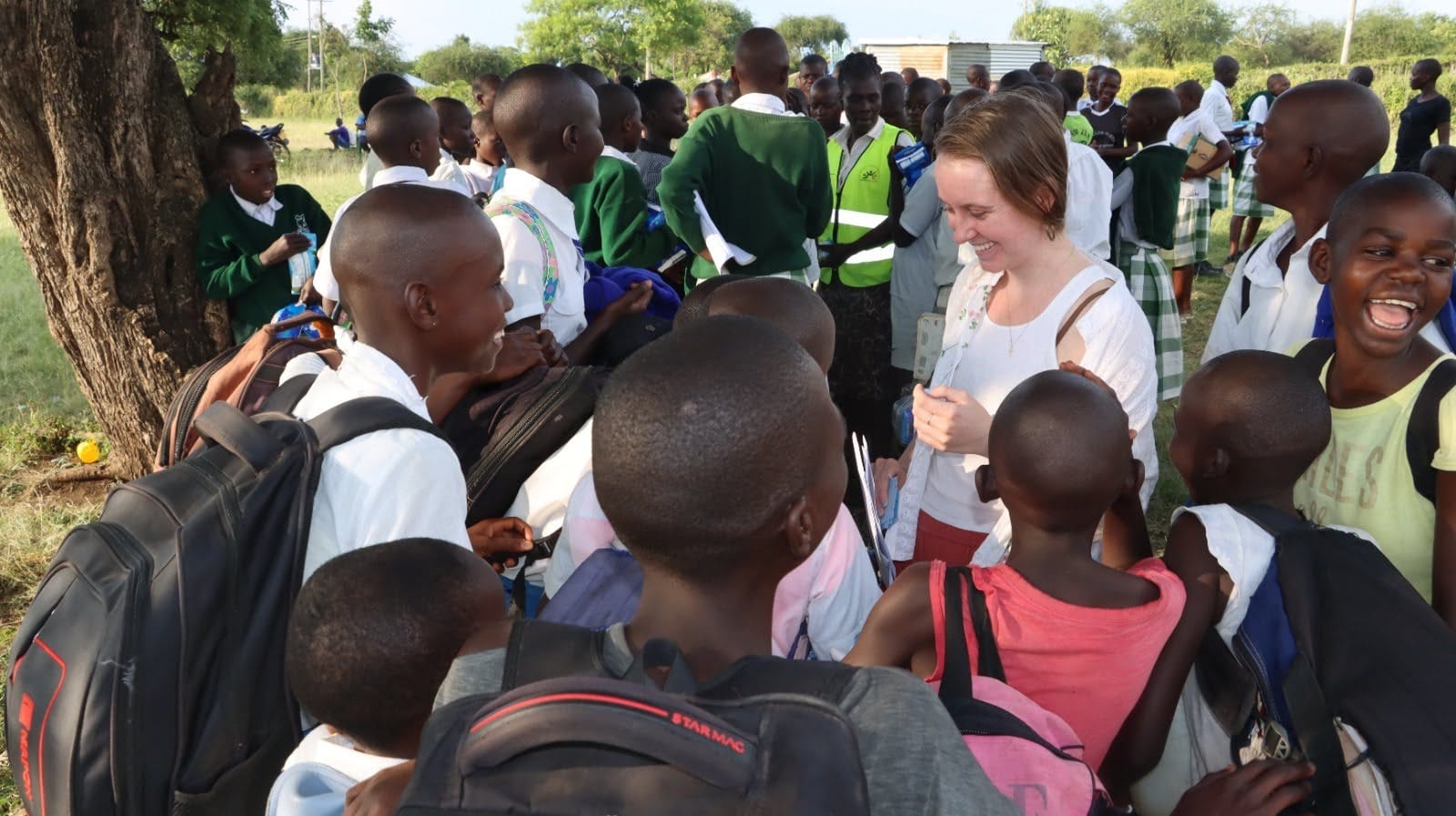


As a 24-year-old Community Health Peace Corps Volunteer serving in Kenya, I am originally from Florida. I work primarily with youth, schools, and community health organizations, co-leading initiatives that empower young people and strengthen the health of communities.
Signing up to be a Peace Corps Volunteer halfway across the world was not in the 10-year plan I made as a senior in high school. Like many people, my plans unraveled in March 2020, when COVID-19 closed schools, cancelled prom and senior week, and turned graduation into a drive‑through ceremony. That moment forced me to slow down and rethink what I actually wanted from my life and career.
During university, I discovered that while I loved science, I was even more drawn to the people and complexities behind the data. I studied Microbiology and Cell Science at the University of Florida with a minor in International Studies, and I fell in love with infectious diseases, public health, and community work. I spent my time moving between the lab and the community: supporting vaccination drives, health education events, and enrollment for Medicare and Medicaid. I realized that health is never just about treating disease. It is shaped by relationships, culture, access, and the sense of dignity and possibility people carry with them; all of which are deeply connected to well-being and peace.
After studying abroad in South Africa and seeing how powerful community‑led health and youth programs could be, I knew I wanted to work internationally. I explored Fulbright, language immersion programs, and the Peace Corps, but I kept meeting Returned Peace Corps Volunteers who spoke honestly about both the challenges and the transformation that service brings. It was refreshing to hear people talk about how their Peace Corps experiences led to profound personal transformation through pushing beyond their comfort zones. While I had wrestled with a similar situation briefly during my study abroad, I felt ready to pursue an experience that was both outside my comfort zone and deeply impactful.Three and a half months after graduating, I boarded a plane with two suitcases and a backpack, committing to a two‑year Peace Corps service, something that once felt far outside my carefully mapped plans.
What Peacebuilding & Youth Empowerment Look Like in My Village
My work in Kenya is multi-sectoral, centering on community health as a pathway to peacebuilding and youth empowerment. Each week, I work alongside the nurses and community health promoters at one of our local hospitals, supporting maternal and child health clinics. I help with routine check‑ups for children and walk with mothers through conversations about nutrition, breastfeeding, and family planning options. These moments, while seemingly small, have shown again and again the strength and power of the women in my community. If women feel well-supported, then they feel confident and empowered, and our entire community becomes healthier and more resilient.
In schools, I work with adolescent students to form health clubs to empower them to become stewards of health in their own communities, at home, and at school. Together we learn about personal hygiene, food hygiene, water safety, HIV and STIs, and reproductive health. These clubs are about more than just information; they are about giving young people the confidence and leadership skills so they can watch out for one another and be informed enough to challenge harmful norms with courage.
Beyond the hospital and schools, I help plan and attend health outreaches to local beach communities along Lake Victoria, where access to care is limited. These outreach days offer antenatal care, postnatal care, and general check‑ups so that distance and transportation are not barriers to health. I also work with community members to design events that respond directly to local challenges: young mother empowerment groups, menstrual health workshops, literacy and ICT training, and positive masculinity sessions for boys and young men. Eventually, these types of community-led events will be hosted in our refurbished Youth Empowerment Center, a project I am co-leading in my second year of service.
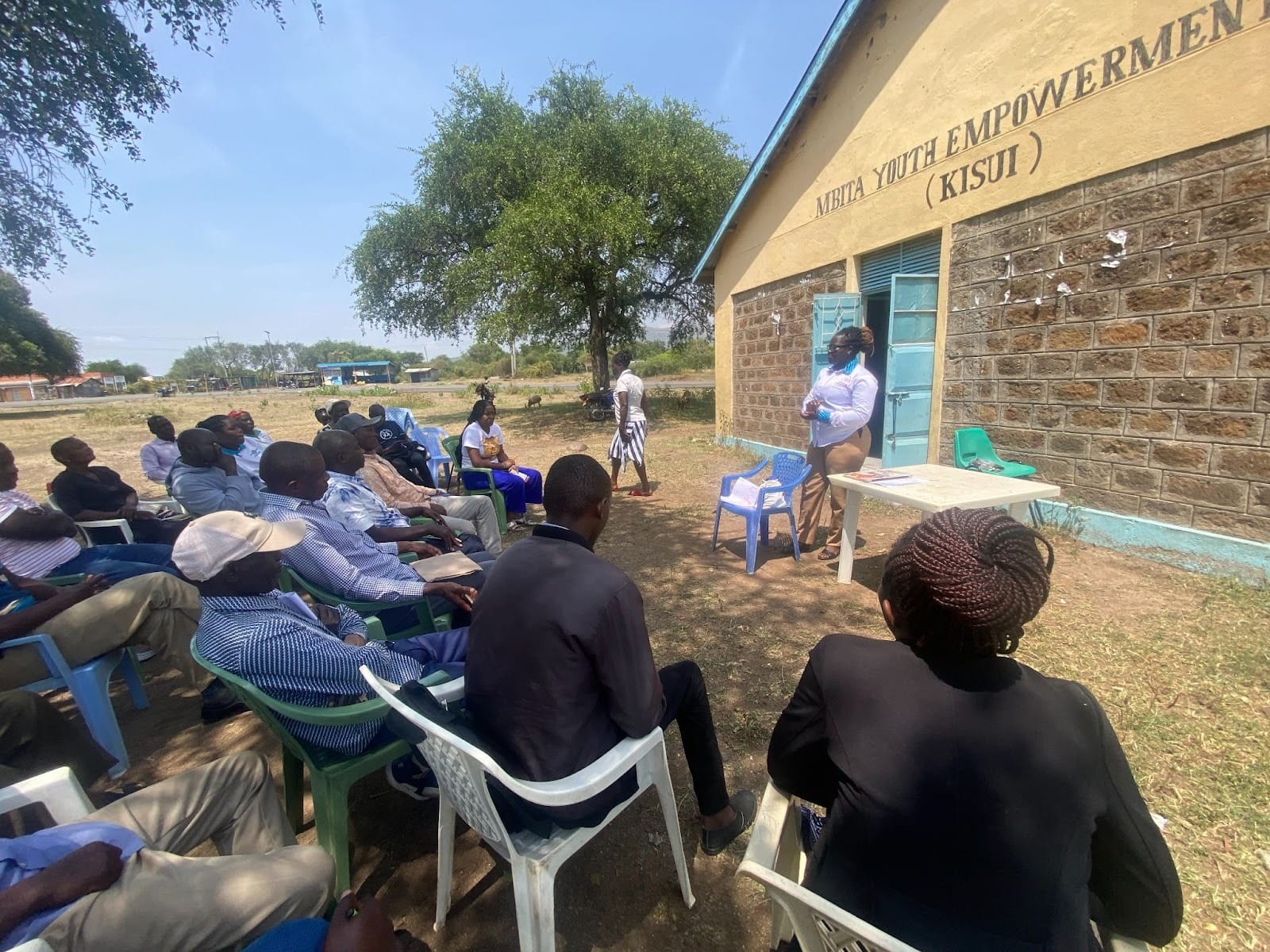
One of the greatest things I’ve learned since being here is that peacebuilding starts with a small act. It starts with meeting people where they are, showing effort through learning the local language, or sharing a meal with them: this is true peacebuilding in practice.
What the Peace Corps Is and How It Works
Peace Corps is a U.S. government volunteer program that places Americans in communities around the world to work alongside local partners in sectors such as health, education, agriculture, and economic development. Volunteers commit to 27 months total: about three months of pre‑service training followed by 24 months at a permanent site.
The application process includes an online application, interviews, and medical and legal clearance. Volunteers do not pay to serve. Flights to and from the host country are covered, and a monthly living stipend is provided to meet basic needs in‑country. Volunteers also receive vacation days, medical care, language training, and technical training, similar to other professional roles, but in a unique community-focused way rarely seen in other positions.
I will serve in Kenya from November 2024 to November 2026. As most Returned Peace Corps Volunteers will tell you, “It’s the toughest job you’ll ever love”, but the best way to learn about others, build confidence, and truly experience the world.
Why This Work Matters
I often think about the 18‑year‑old version of myself who was anxious about calculus exams and unsure of who she wanted to become. She could never have imagined this life. Spending my days sitting in the shade of a tree, planning a menstrual health workshop with my counterpart, spending an eight-hour day in a new village near mine to help deliver medical services in a health outreach, or laughing with students as they lead their first school health club session.
While I am proud of the programs I’ve helped lead, mentoring girls, teaching boys about positive masculinity, supporting young mothers in income-generating businesses, and building a functioning Youth Empowerment Center – the relationships I’ve forged are what matter most.
In this village, I have gained the guidance and love of what feels like 50 grandmothers, the care of 10 mothers, and countless younger brothers and sisters. Their trust and generosity inspire me every day. I don’t know that I could ever give back as much as they’ve given me, but I try day in and day out. The 18-year-old girl with her carefully mapped 10-year plan could never have imagined this life, but she would be proud to know I’ve learned to let go, show up fully, and embrace the purpose found in serving others.
The challenges in Kenya are very real: stigma around HIV, other STIs, and Sickle Cell Anemia; gender-based violence; teenage pregnancy; limited resources; and deeply rooted cultural norms that affect health and opportunity. But so is the hope.
Every day, I witness adolescents gaining confidence, stepping into leadership positions, young mothers advocating for their families, and communities choosing teamwork and innovation. In walking alongside youth, families, and health workers in my community, I’ve learned that peacebuilding doesn’t come from grand plans, but from daily acts of presence, listening, trust, and shared humanity.